
Understanding the Schengen Visa: Travel Made Easy Across Europe
12/29/20251 min read
What is the Schengen Area?
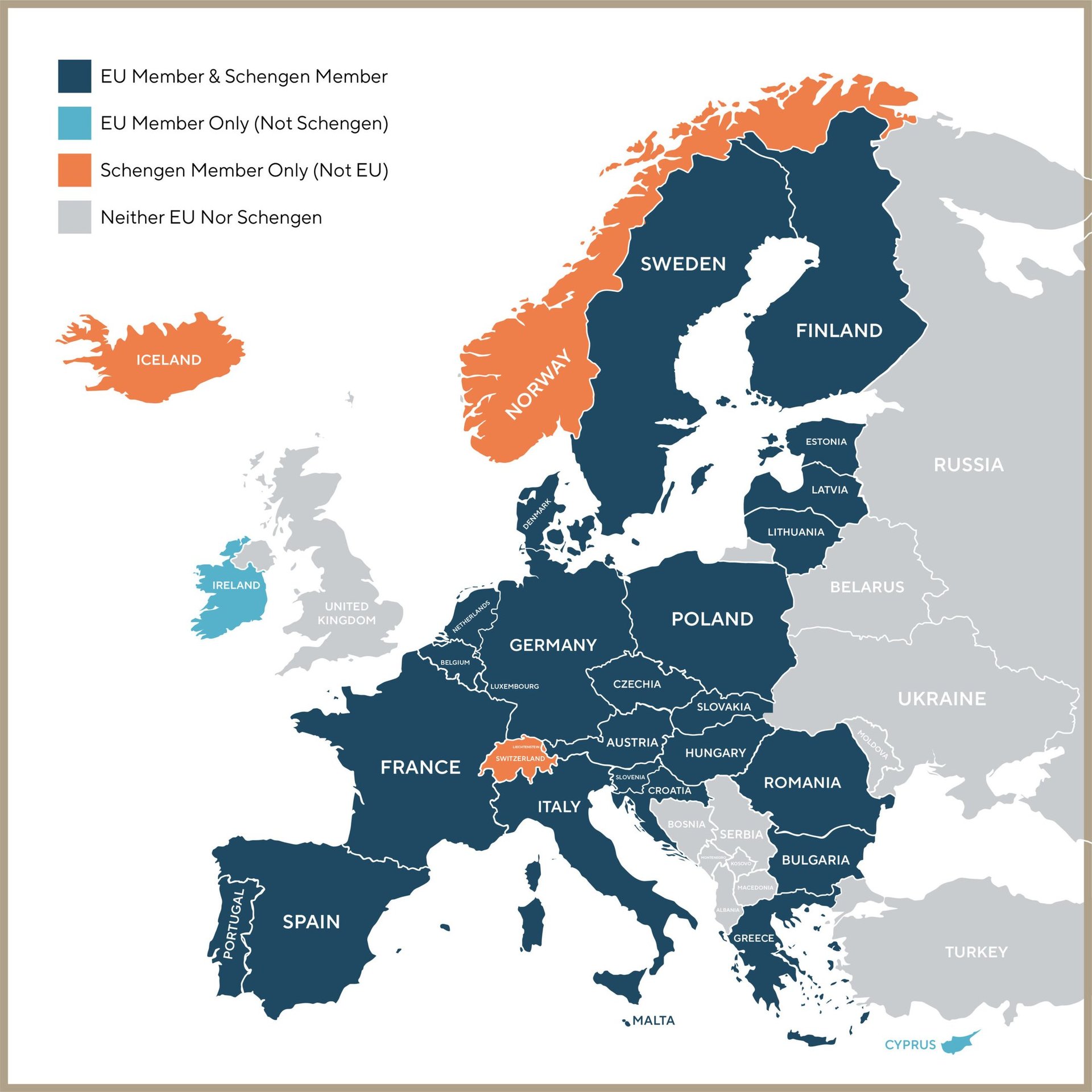
The Schengen Area is a group of 27 European countries that have abolished internal border controls. This allows people to travel freely between these countries without passport checks at the borders.
Major Key points about the Schengen Area
Border-free travel: Once you enter any Schengen country, you can move freely to other Schengen countries.
Single visa system: A Schengen visa allows travel to all Schengen countries.
Short-stay rule: Visitors can stay for up to 90 days in any 180-day period for tourism, business, or family visits.
Common external border: Entry checks are done only when you first enter the Schengen Area from outside.
Who needs a Schengen visa?
Citizens of many non-EU countries (including India) must obtain a Schengen short-stay visa before traveling.
🌍 Schengen Area – Full Country List (27)
🇪🇺 EU Schengen Countries (23)
Austria, Belgium, Croatia, Czech Republic, Denmark, Estonia, Finland, France, Germany, Greece, Hungary, Italy, Latvia, Lithuania, Luxembourg, Malta, Netherlands, Poland, Portugal, Slovakia, Slovenia, Spain, Sweden
🌍 Non-EU Schengen Countries (4)
Iceland, Liechtenstein, Norway, Switzerland
❌ Not Schengen (even though in Europe):
UK, Ireland, Romania, Bulgaria, Cyprus
📌 Important Rules (Very Important for Visa Filing)
One visa = 27 countries
Apply at:
Country of main stay, OR
Country of first entry (if stay is equal)
Stay limit: 90 days max in any 180 days
🛂 Types of Schengen Visas (Short Stay)
1️⃣ Tourist Visa
Sightseeing, holidays
Visit family/friends
Valid for up to 90 days in 180 days
2️⃣ Business Visa
Meetings, trade fairs, conferences
No paid work allowed
3️⃣ Visitor Visa
Visiting relatives or friends
Invitation letter required
4️⃣ Airport Transit Visa
Only for airport transit (no entry into country)
5️⃣ Official / Cultural / Sports Visa
Events, competitions, cultural programs.